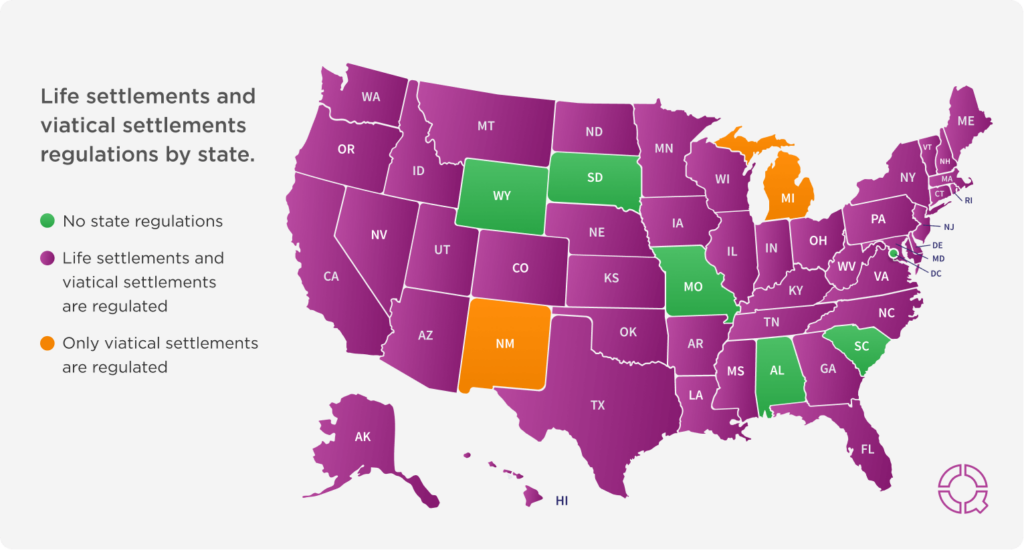
Life Settlement Regulations Map by State
What is one of the most important things to know about life settlements and viatical settlements? Both life settlements and viatical settlements are regulated in the U.S. at the state level. That means that either your state’s insurance department or financial services department has laws, rules, and regulations on the books that govern a life settlement transaction. Important Objectives of Life Settlement and Viatical Settlement Regulation A life settlement or a viatical settlement is the sale of a life insurance policy on the secondary market. Why is there life settlement regulation? The main focus of the regulation is consumer protection, that means the policyholder (in some regulations also referred to as the viator). The key items that are covered by regulation: Licensure – requires parties that represent viators (life settlement brokers and viatical settlement brokers) to meet. Escrow – requires all life settlement transactions to be funded into an escrow account to ensure that funding is secured before the policy owner files paperwork with the insurance company naming the life settlement company as the new owner. Fraud Prevention – rules, depending on the state, that prohibit selling a life insurance policy until either two years or five years after policy issuance. There are exceptions to these rules, including term conversions, loss of job, change in heath, divorce, and others. Minimum Cash Payments – regulatory requirements, typically only applicable with viatical settlements, stating the minimum cash payment to the policy owner in a sale. Disclosure – outline of the impacts that selling your policy can have on specific items, including eligibility for Medicaid (which can impact qualifications for government assisted long-term care), availability of accelerated death benefits inside your life insurance policy, name of the escrow agent, options to access cash surrender value, and other key items. Filing of Settlement Contracts